
After a day touring Furnas Valley, we were excited to see more of Sao Miguel. Our second tour with Azorean Tours would take us to the western end of the island to Sete Cidades.
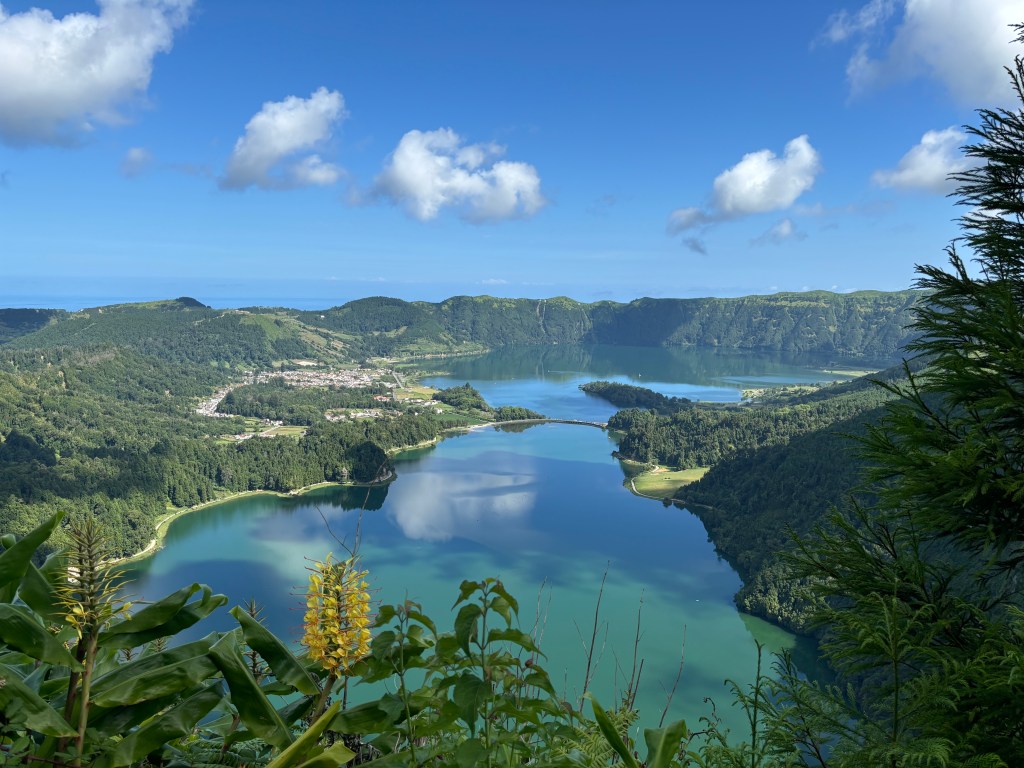
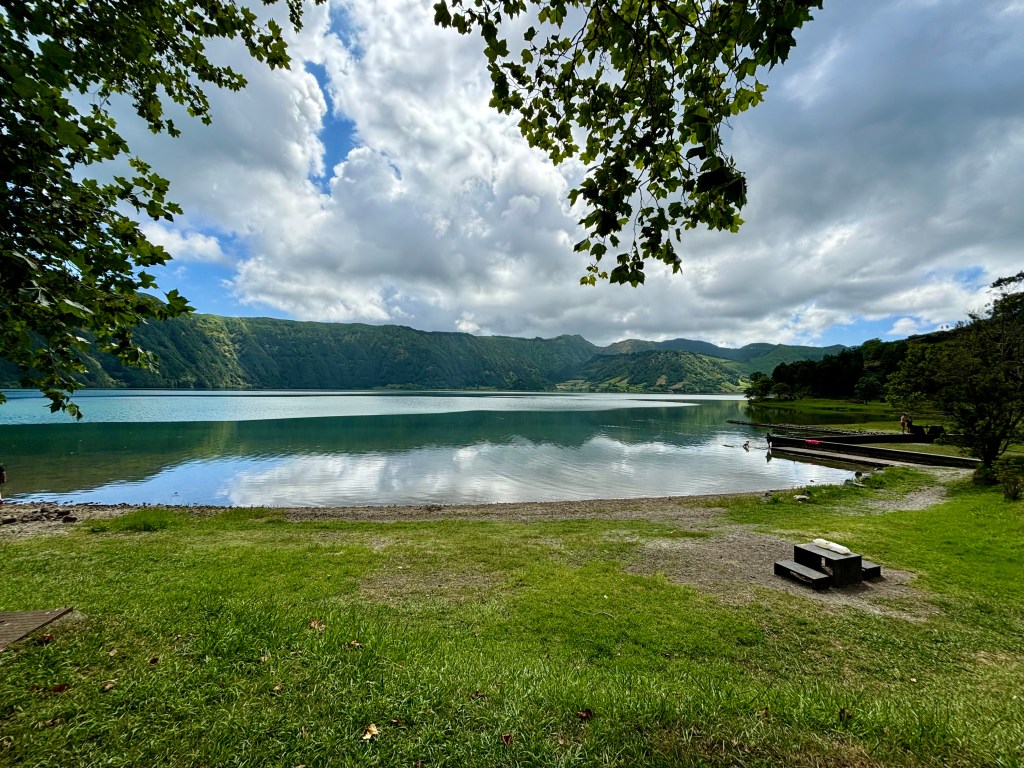
The Sete Cidades volcano occupies 110 square kilometres on the extreme western portion of Sao Miguel, with two crater lakes known as Lagoas das Sete Cidades and referred to by the colours of their waters: blue (Lagoa Azul) and green (Lagoa Verde). These striking lakes are featured in some of the most iconic images of the Azores.
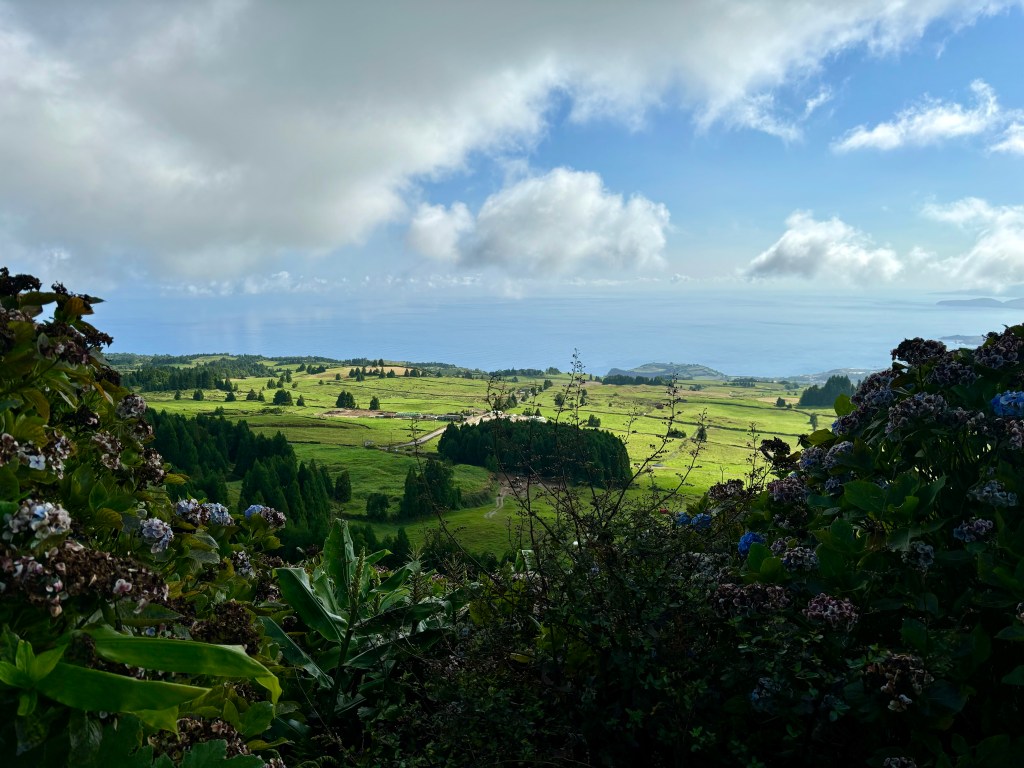
Cesar picked us up again in the morning and along the way, we stopped to check out some nice viewpoints. We drove along roads lined with hydrangeas, beautiful despite not being in full bloom. We also got caught in a little cattle traffic jam. Fun fact: cows outnumber people in the Azores in a ratio of 2 cows per inhabitant.
Hiking to Vista do Rei
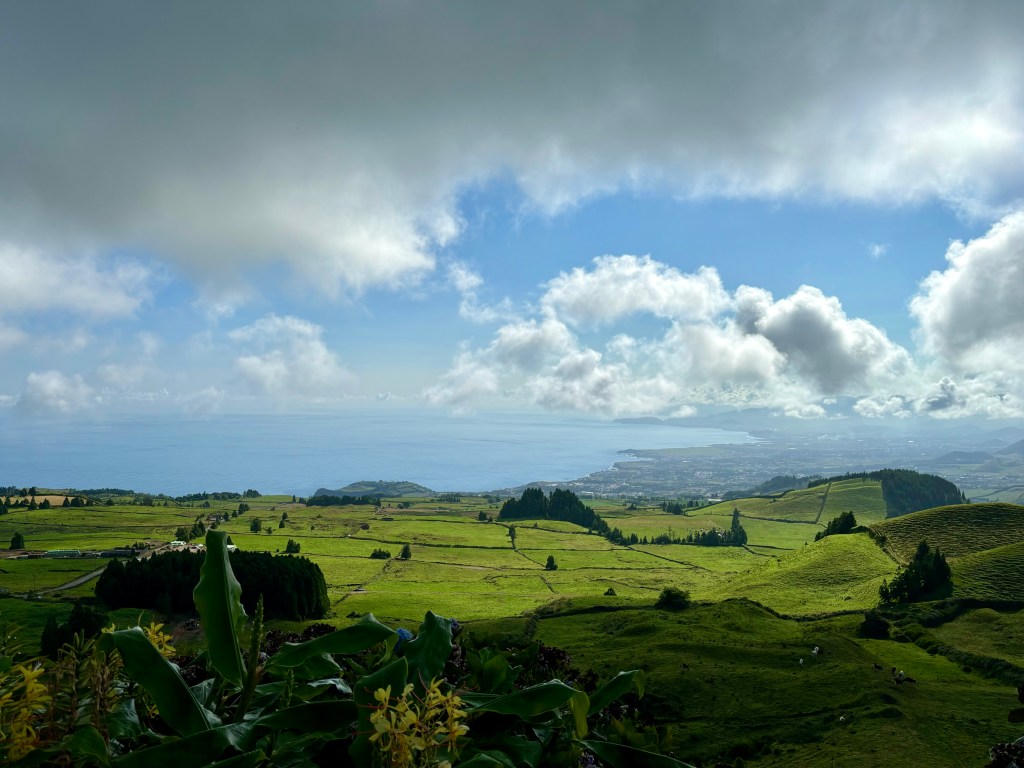
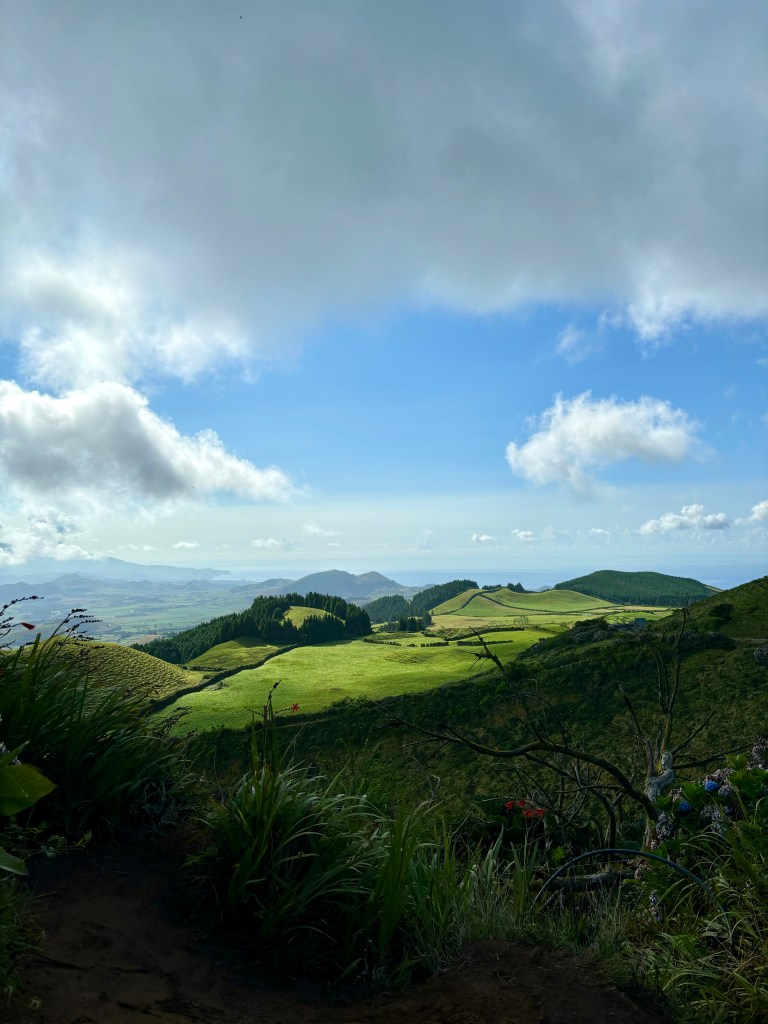
The best place to admire the view of Sete Cidades is from atop the rim of a volcanic crater at Vista do Rei, translating to “King’s View”. From this vantage point, you can gaze out over the dual lakes nestled within the crater’s expanse.
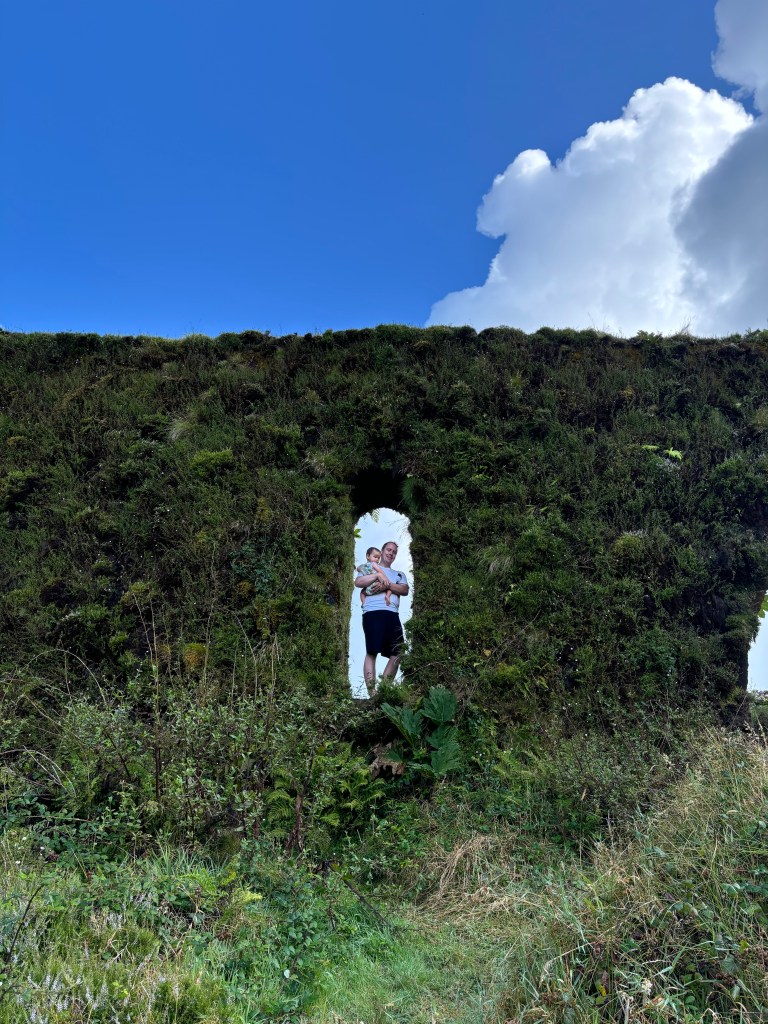
The walk from the parking lot to the viewpoint was about 30 minutes along maintained trails. It would be considered a very easy hike but we struggled with the heat and humidity, made worse by having to lug a cranky Teddy in the carrier.
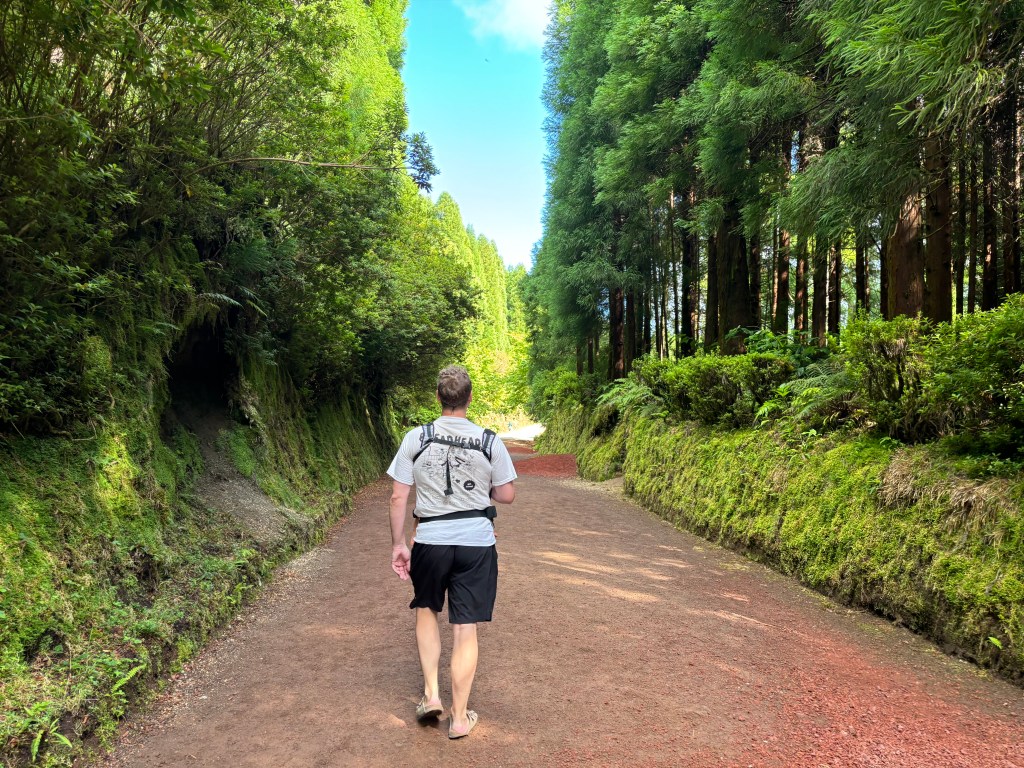
A side note I should add is that we didn’t bother with the stroller for the majority of our trip and used our Tula Baby Lite carrier which generally worked well for us. It was easy to pack up and Teddy actually fell asleep in it many times.
The last part of the walk was moderately uphill along a narrow trail that got a bit crowded toward the end. Once at the top, we stopped to take in the views.
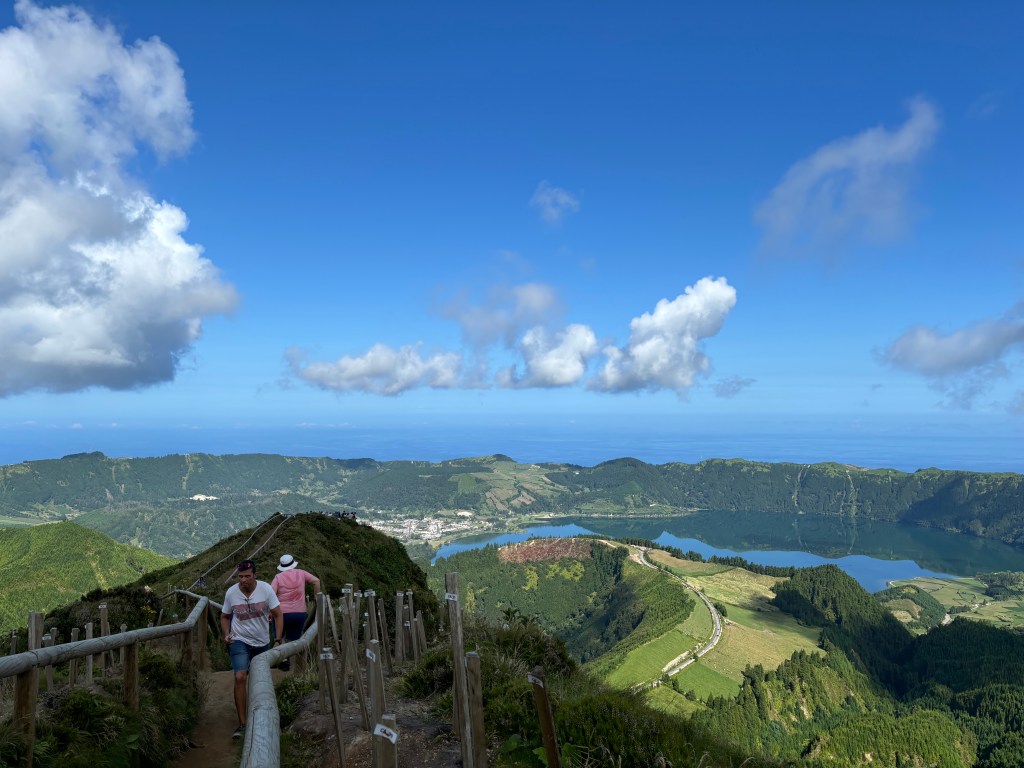
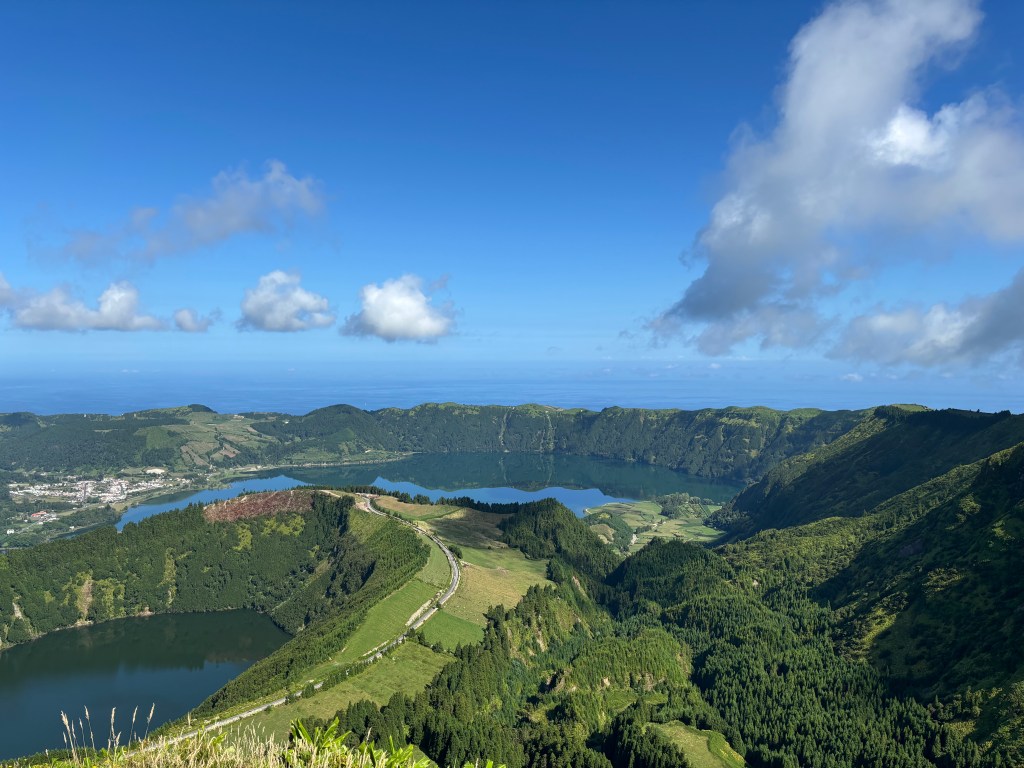
After looping back to the car, Cesar took us downhill for a closer view of the lake which we actually thought was better.
For lunch, we went to Gazcidla Restaurante, where we tried the limpets and their signature octopus dish. Delicious!
Black sand beach in Mosteiros
After we were sufficiently fed, we headed off to Mosteiros. This village is best known for its beach, made of dramatic black volcanic sands reminiscent of our time in Iceland.
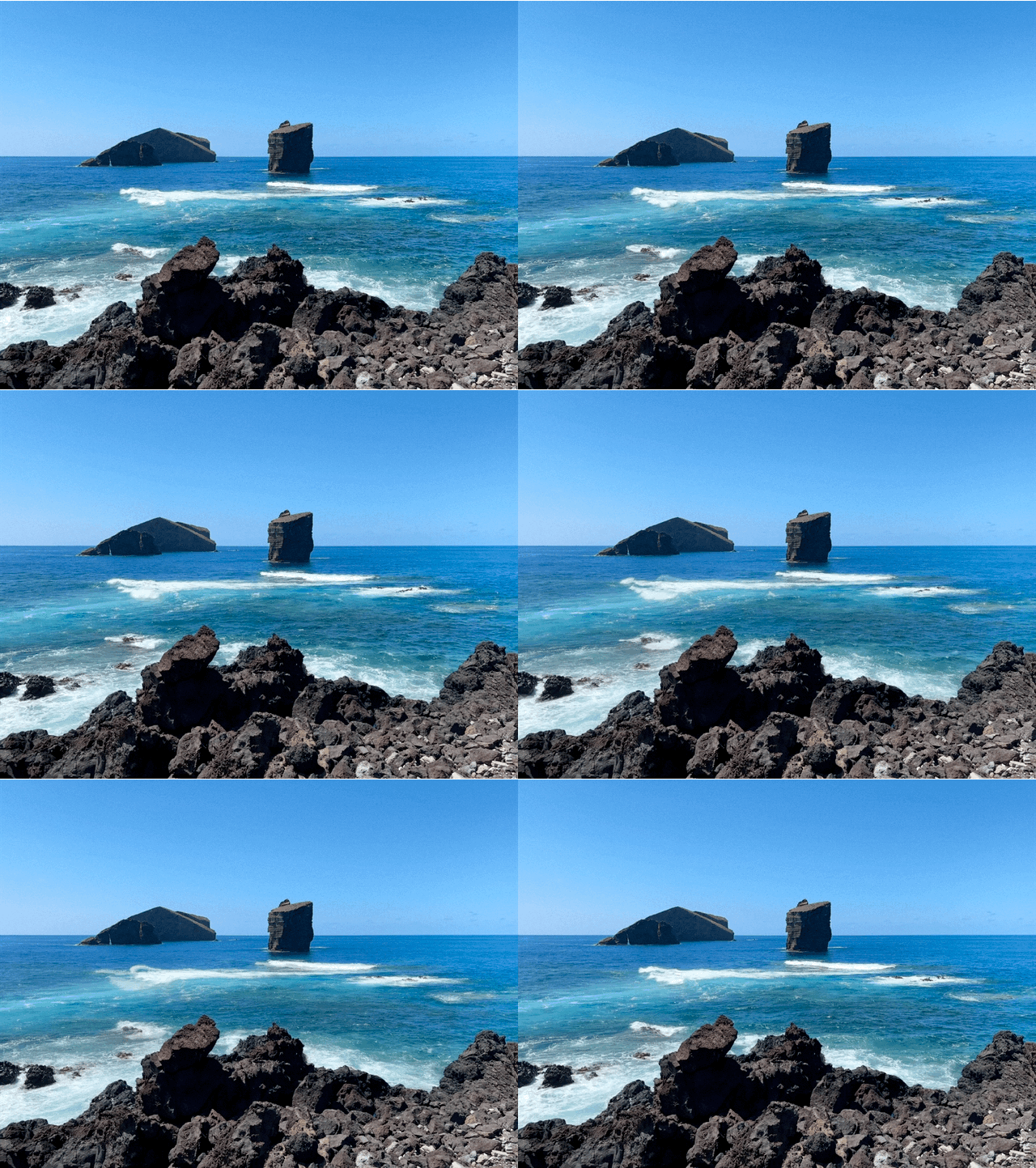
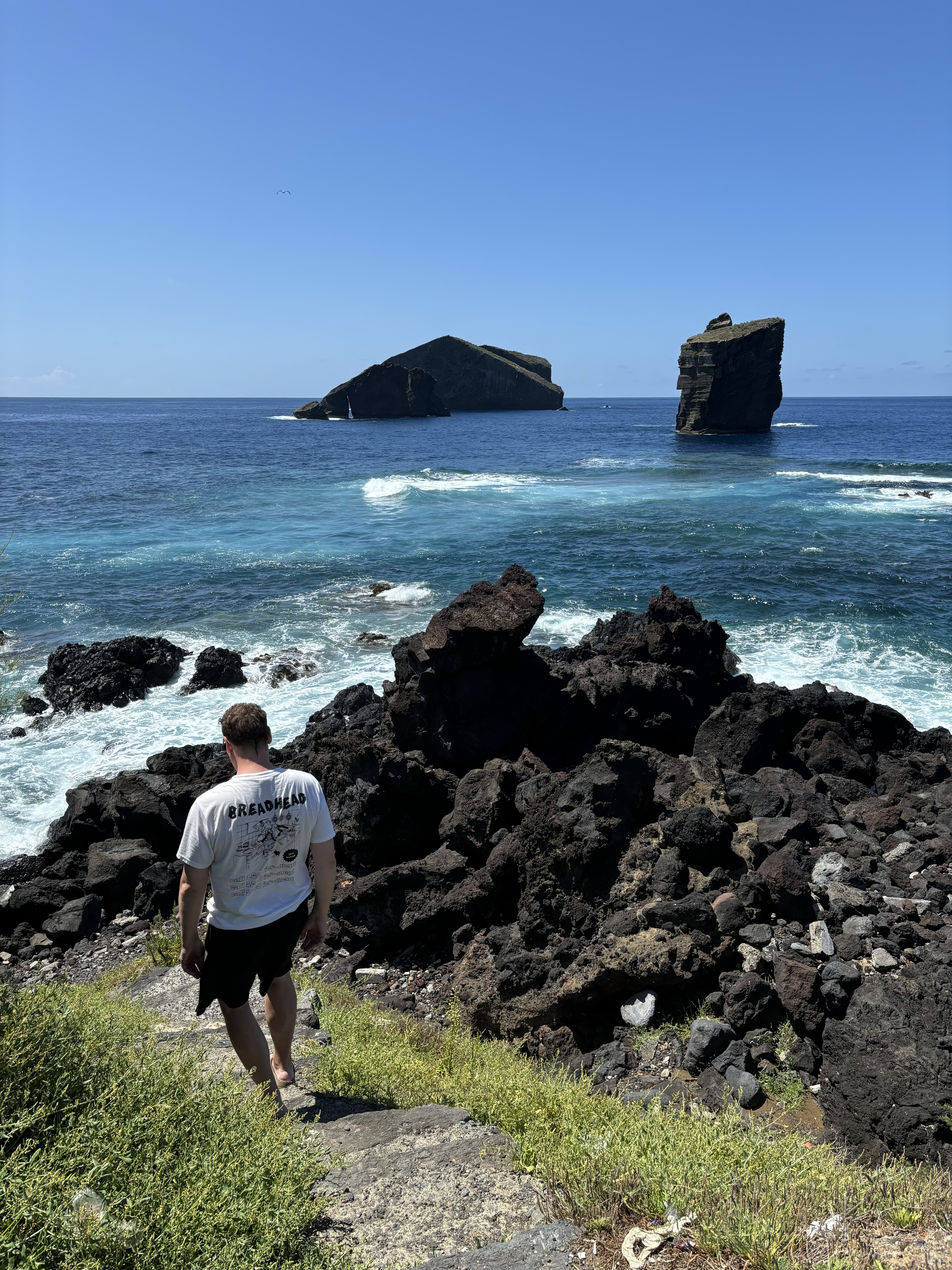
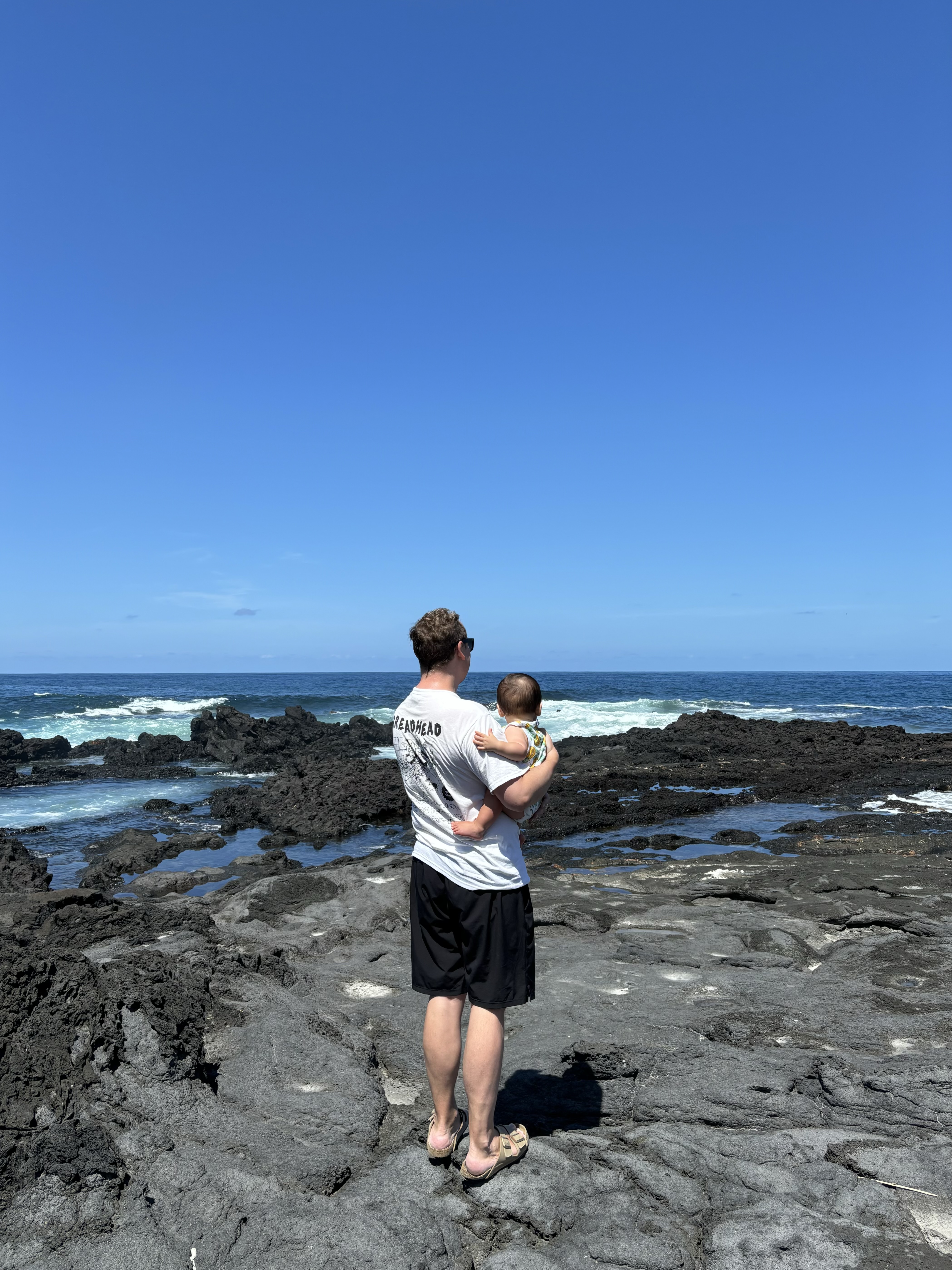
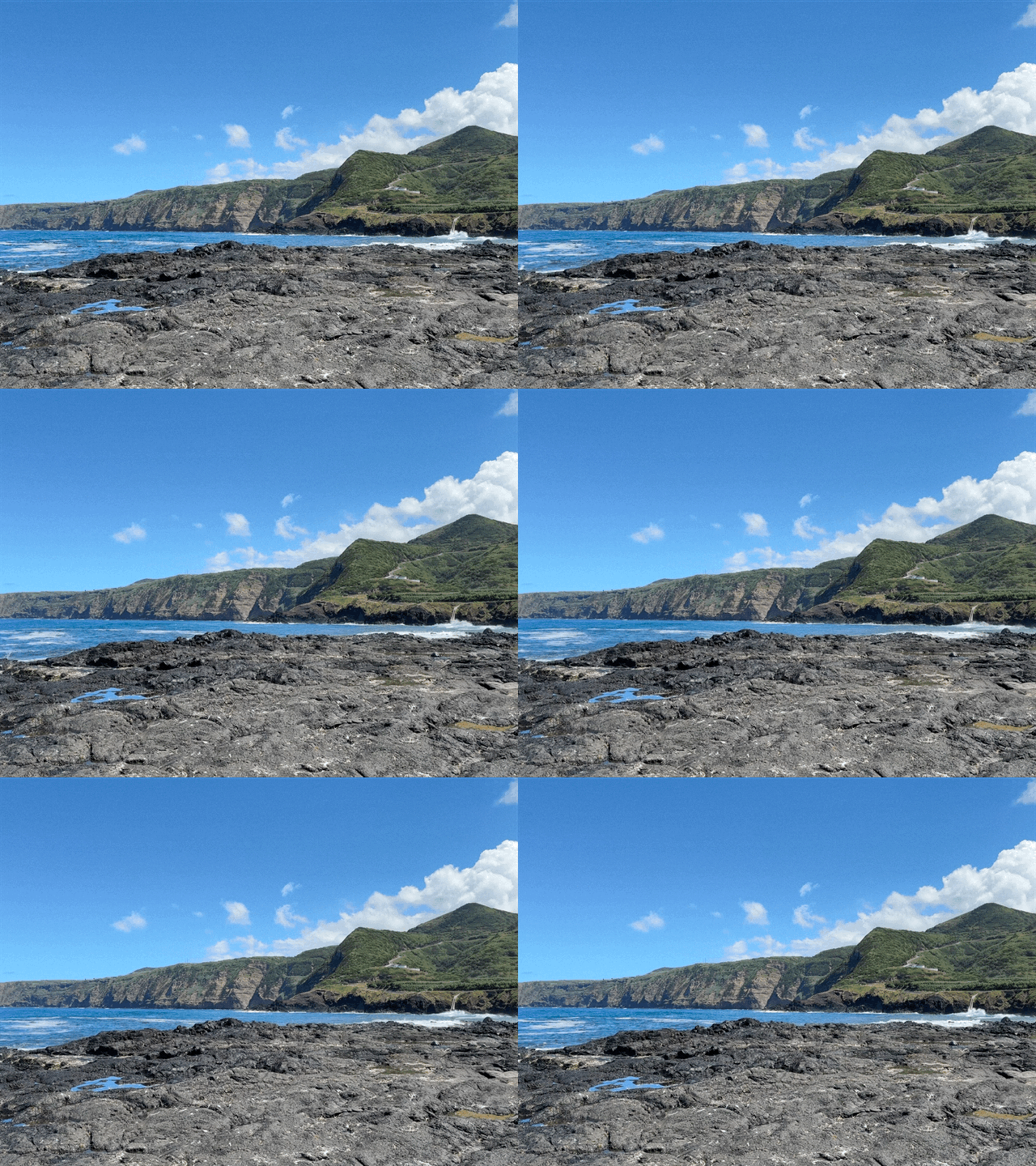
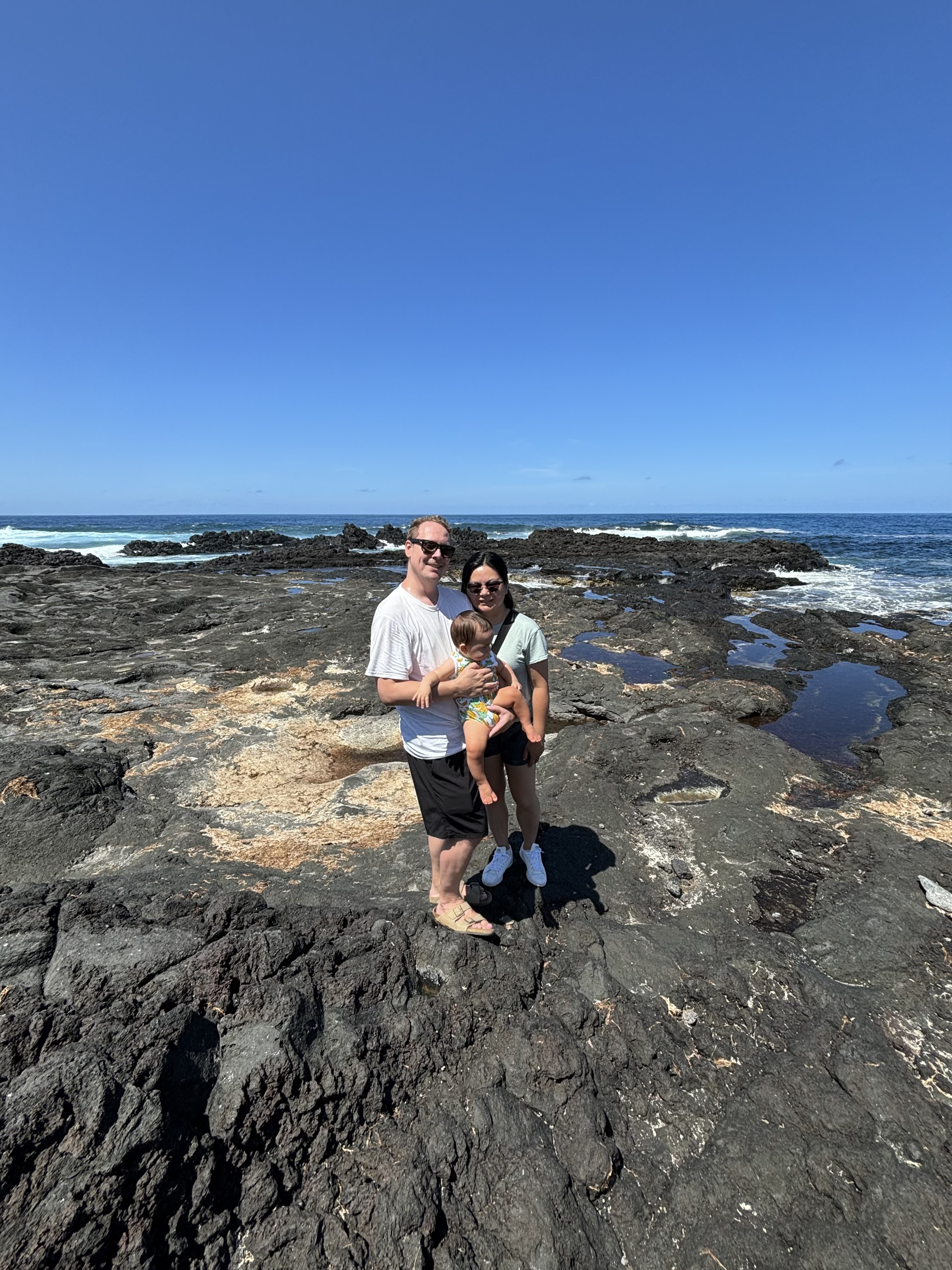
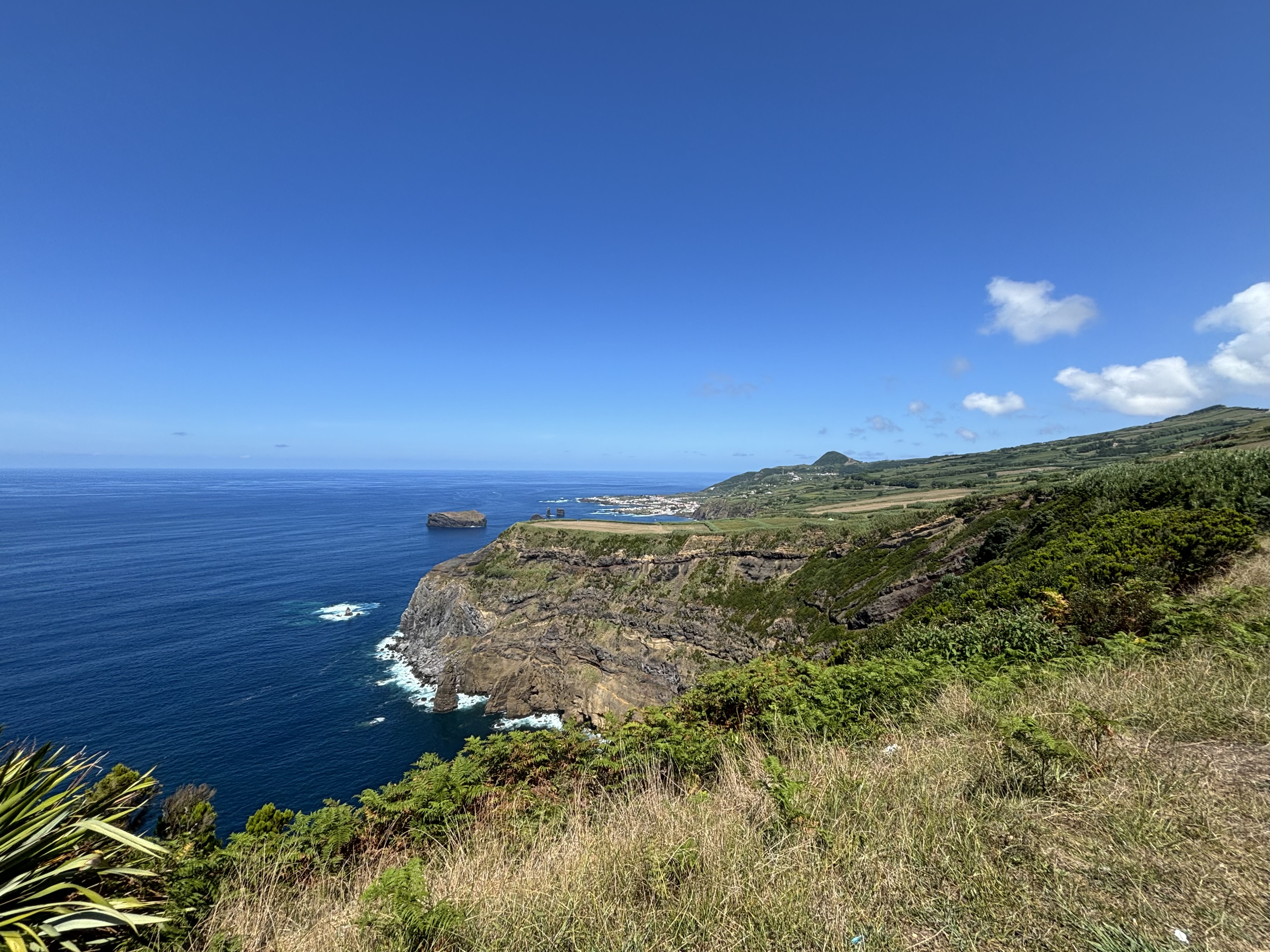
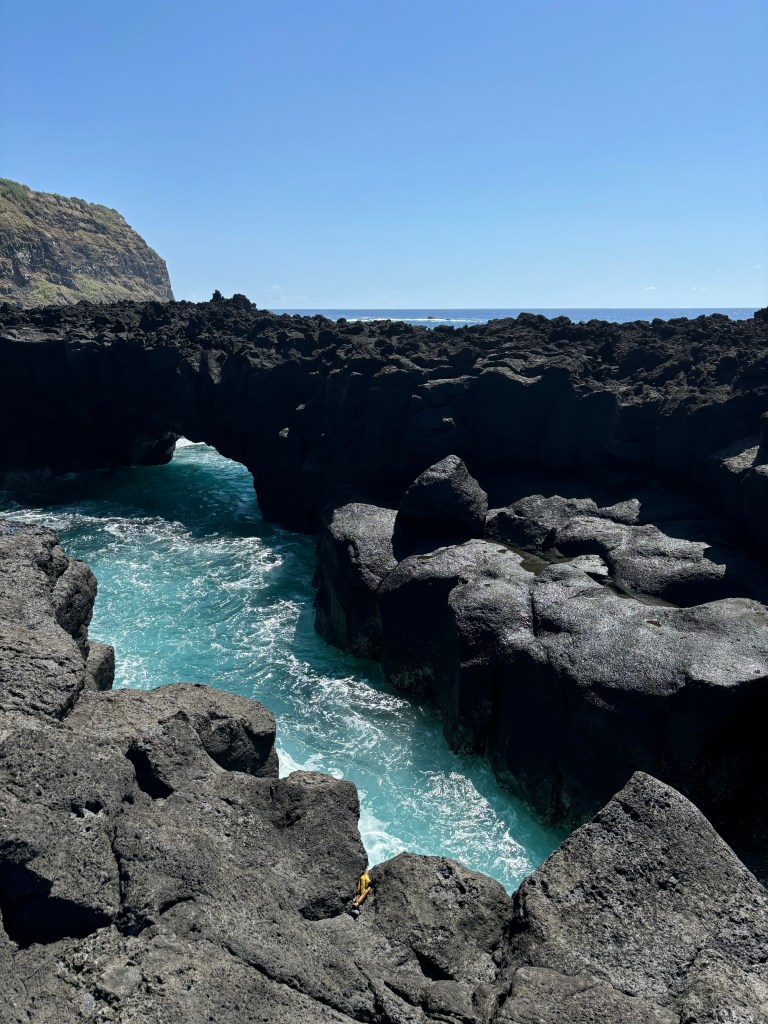
There was also a natural pool accessible for swimming, but the water looked too rough for our comfort especially with Teddy in tow.
Tasting Sao Miguel pineapple
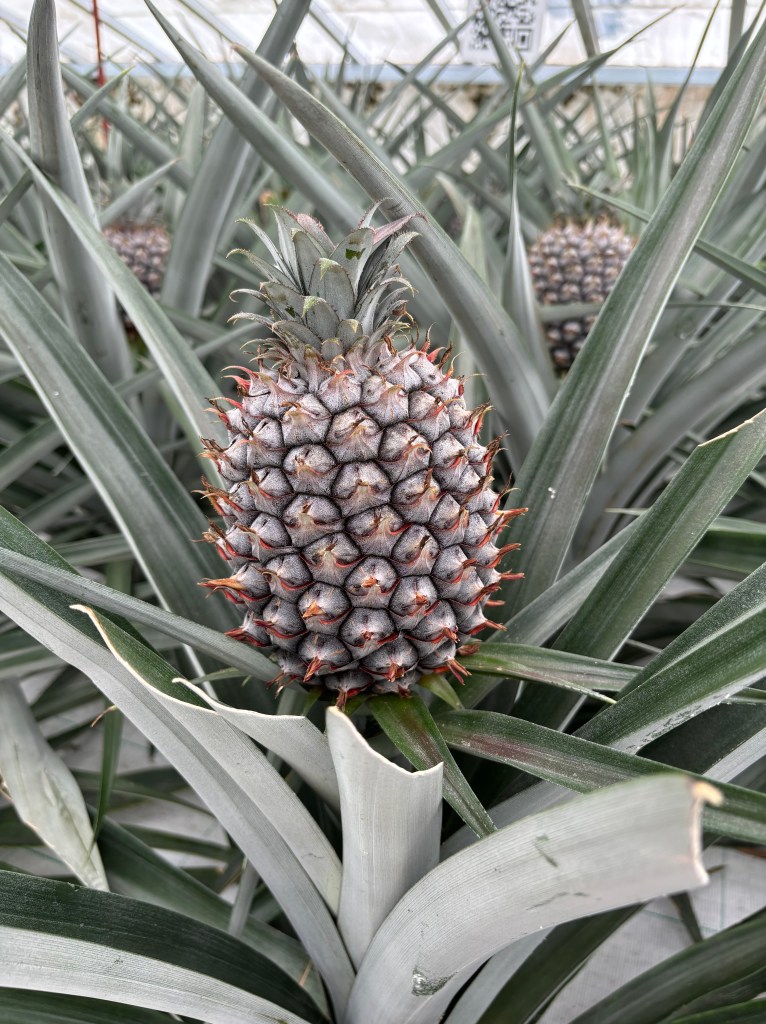
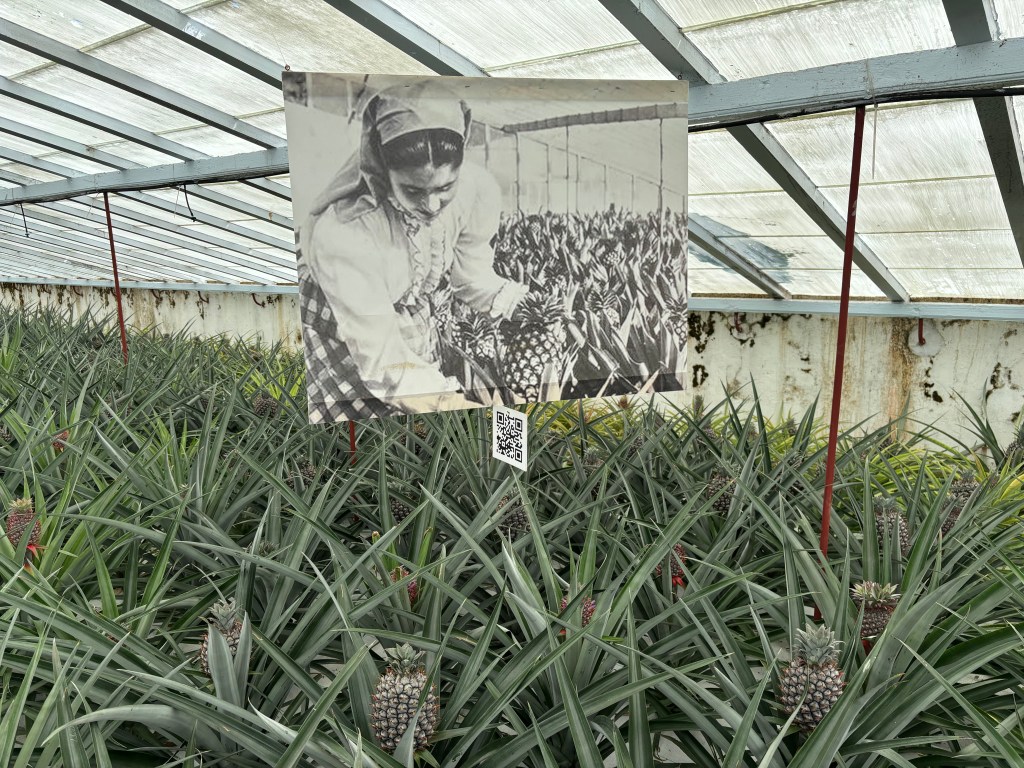
Our last destination of the day was the pineapple plantation in Ponta Delgada. Pineapples were first introduced to the Azores in the mid-19th century. Initially, they were purely ornamental, but later became a major export with the decline of the orange trade and subsequent need for a new cash crop.
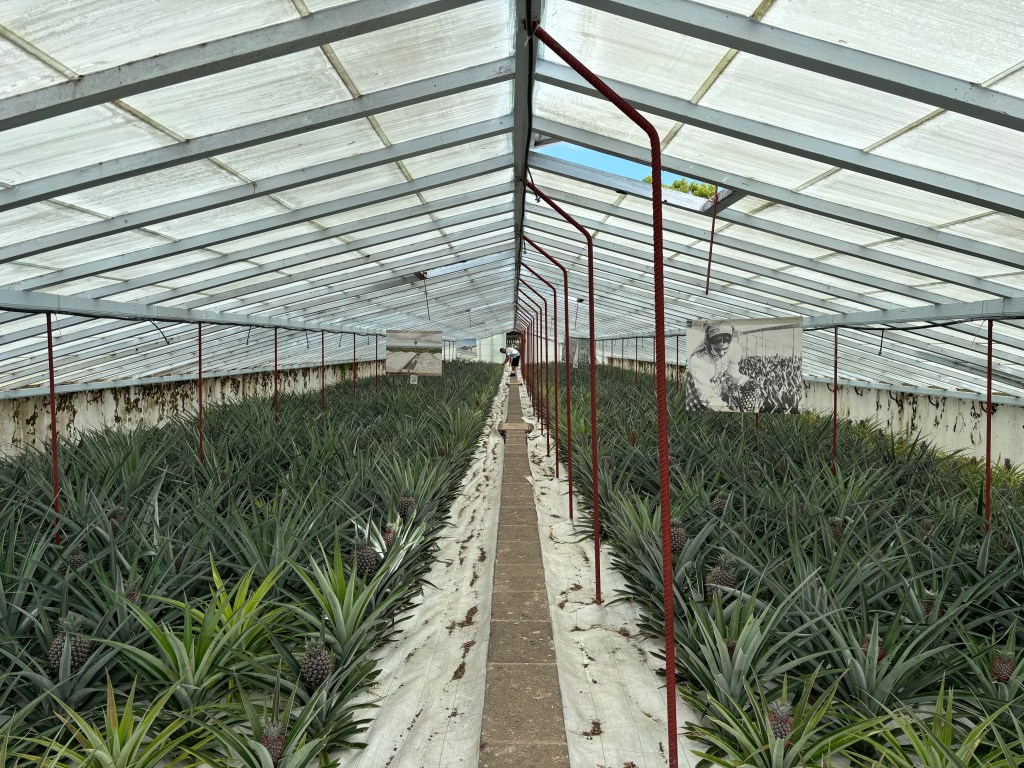
Sao Miguel is one of the few places in the world where pineapples are grown in greenhouses. There are approximately 6000 plantations around the island, a few of which are open to the public.
We were able to walk inside the greenhouses and then tried some fresh pineapple and snacks from the cafe.
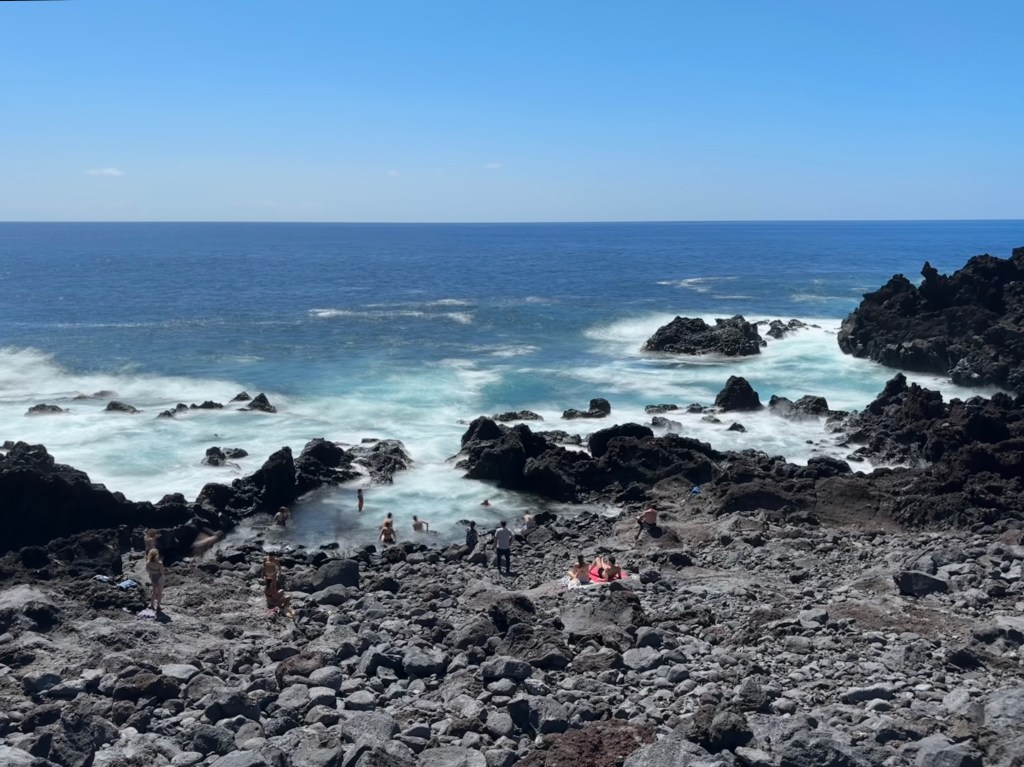
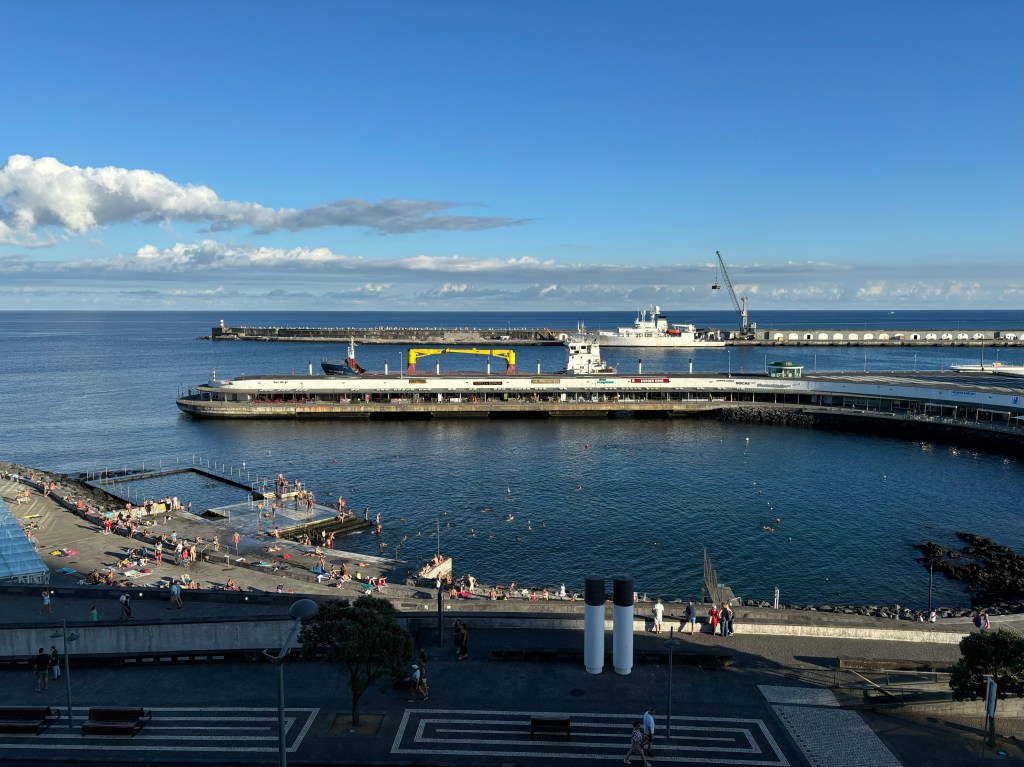
We finished up our day at around 5 pm and were ready to cool down. We decided to check out the natural pool across the street from the hotel and had a dip in the ocean before dinner. Although there was a marked perimeter, the water definitely felt rough and I didn’t venture out much beyond the pool ledge with Teddy, but it was still a refreshing swim!
We had dinner again at the hotel, and then called it an early night in preparation for our final day in the Azores.



 I've Bean Travelling
Leave a comment